


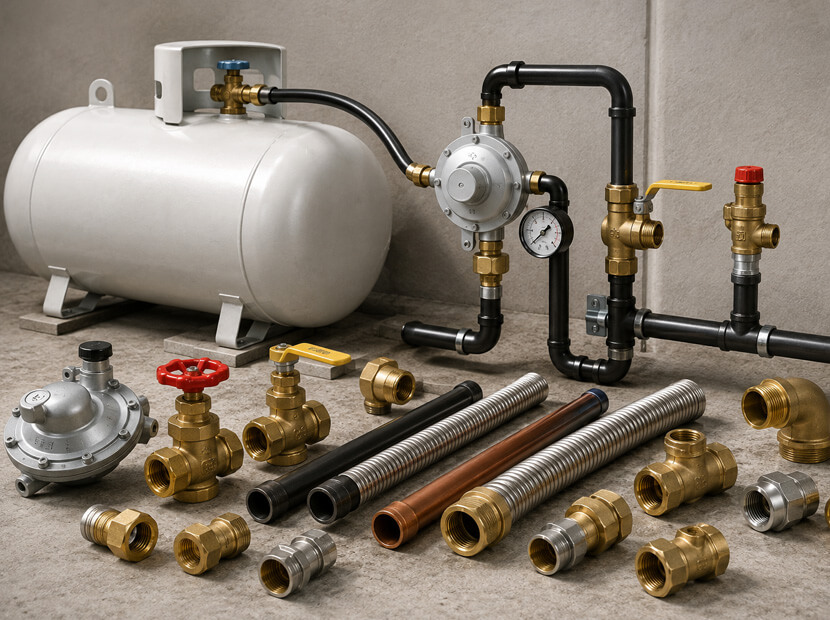
A propane system can look deceptively simple from the outside. There is a tank, a line, and an appliance that needs fuel. In practice, reliable propane delivery depends on a chain of components doing their jobs together. The tank stores the fuel, regulators manage pressure, valves control flow, piping carries the gas, and fittings make secure transitions from one part of the system to the next.
That is why buying a propane tank should rarely be treated as an isolated purchase. For homeowners, contractors, restaurants, property managers and commercial facilities, the better question is: what does the complete system need to operate safely and consistently?
For anyone searching for a dependable propane tanks supplier in Florida, understanding the full system makes it easier to ask the right questions, source compatible parts and avoid project delays caused by a missing regulator, valve or connector.
The propane tank is the starting point
Every system begins with storage. The tank needs to suit the application, expected fuel demand, available space and installation requirements. A residence using propane for cooking will have different needs from a commercial kitchen, a generator installation or a property running several propane appliances.
Tank selection also affects the rest of the system. The required pressure, regulator arrangement, piping capacity and connection hardware all depend partly on how the propane will be stored and used.
This is one reason an experienced supplier is valuable. Rather than choosing a tank only by size or price, buyers can consider how it will fit into the complete installation.
1. Regulators: controlling pressure before gas reaches the appliance
Propane inside a tank is stored under pressure. Most appliances cannot use that pressure directly, so a regulator reduces and stabilizes it before the gas moves downstream.
Depending on the application, a system may use a single-stage regulator, a two-stage arrangement or another configuration suited to the equipment and installation. Correct regulator selection is important because under-sizing, incorrect pressure or an incompatible regulator can affect appliance performance.
For contractors and maintenance teams, keeping access to the correct regulators can be just as important as having access to tanks. A good gas equipment supplier should be able to help match the regulator to the intended application rather than treating it as a generic accessory.
2. Valves: small components with a critical job
Valves control, isolate and protect different parts of the propane system. They may be used for service shutoff, tank operation, pressure relief or other functions depending on the installation.
Because valves are mechanical components, condition matters. Damage, corrosion, wear or improper replacement can create problems even when the tank itself is in good shape.
When ordering replacement parts, buyers should avoid choosing a valve simply because it appears to fit. Specifications, application and compatibility matter. Working with a propane tank parts supplier that carries a broader range of gas components can make correct replacement easier.
3. Piping and CSST: moving propane where it is needed
Once pressure is controlled, the gas has to travel from the storage area to the appliance. That is where piping becomes part of the system design.
Traditional gas piping remains common, while corrugated stainless steel tubing (CSST) is used in many applications because it can simplify routing through certain spaces. The appropriate material and sizing depend on the installation, distance, gas demand and applicable code requirements.
Piping is not an area for guesswork. A line that is incorrectly sized can affect how equipment performs, particularly when multiple appliances operate at the same time. Installation should always follow manufacturer instructions and applicable codes, and licensed professionals should be used where required.
4. Fittings, connectors, risers and couplings: where details matter
A propane system contains numerous transition points. Fittings join sections of piping, connectors provide appliance connections, and risers or couplings may be required depending on the system layout.
These are relatively small pieces compared with a tank or water heater, but one missing or incompatible fitting can hold up an entire job. Contractors know this problem well: the major equipment is on site, the crew is ready, and work stops because a specific connection component is unavailable.
For recurring projects, having one gas equipment distributor that can supply tanks as well as regulators, valves, fittings and related parts can reduce purchasing friction and make replacement sourcing easier later.
5. The appliance: where system design becomes real-world performance
The final destination might be a cooktop, commercial range, generator, outdoor appliance, tankless water heater or another propane-powered device. Each appliance has its own fuel and pressure requirements, and those requirements should influence the upstream system.
Tankless water heaters are a good example. They can demand a significant amount of fuel while operating, so a system needs to be planned around more than the fact that the appliance uses propane. Tank capacity, regulator capacity and gas-line sizing all need to work together.
This whole-system view is useful when adding new equipment to an existing property. An installation that was adequate for one or two appliances may need to be reassessed before another high-demand appliance is added.
Why sourcing compatible products from one supplier can help
It is possible to buy each part of a propane system from a different source. Sometimes that is unavoidable. But when the products are available from an experienced supplier, there are practical advantages to consolidating the purchase.
- Easier access to compatible tanks, regulators, valves and fittings.
- Less time spent searching multiple vendors for replacement components.
- A single point of contact when a product specification needs clarification.
- Better continuity for contractors handling repeat installations or service work.
- Simpler planning when a project requires both major equipment and small gas parts.
For commercial buyers, availability can be as important as price. A lower-cost component is not very helpful if it delays a project for days because the rest of the required parts cannot be sourced.
Florida conditions add another layer to equipment planning
Florida’s climate deserves attention when outdoor gas equipment is involved. Heat, humidity, heavy rainfall and coastal salt exposure can accelerate wear on exposed metal and connections if equipment is not properly installed and maintained.
That does not mean propane systems are unsuitable for Florida. It means product selection, placement and routine inspection should account for the environment in which the equipment will operate.
For coastal properties in particular, keeping an eye on corrosion and the condition of exposed components is a sensible maintenance habit. If a part shows unusual wear, it is better to identify the correct replacement before it becomes an urgent problem.
A practical checklist before ordering propane equipment
Before contacting a supplier, it helps to collect a few details about the project. You do not need to design the system yourself, but the following information can make the conversation more productive:
- What appliances or equipment will use propane?
- Is this a new installation, replacement or expansion?
- What tank size or existing tank information is available?
- Will multiple appliances operate at the same time?
- Which regulators, valves, fittings or connectors are already on site?
- Is the installation residential, commercial or industrial?
- Are there site-specific conditions such as coastal exposure or limited equipment space?
The more complete the picture, the easier it is to identify the products that belong together.
Choosing a propane tanks supplier in Florida
If your project starts with a propane tank, look beyond tank inventory alone. A supplier that also carries regulators, valves, connectors, fittings, CSST, risers, couplings and other gas equipment can be more useful over the life of the system.
Technico has served the propane and natural gas industry since 1985 and supplies propane tanks and accessories along with a broader range of gas equipment for contractors, businesses and customers across Florida.
Whether you are planning a new installation, replacing a component or expanding an existing propane system, thinking from tank to appliance can help you avoid mismatched parts and unnecessary delays.
The takeaway
A propane tank may be the most visible part of the system, but dependable performance comes from the whole chain. Tanks, regulators, valves, piping, fittings and appliances all have to be selected with the same application in mind.
If you are sourcing propane tanks or related gas equipment in Florida, start with the complete system rather than a single component. It is a simpler way to plan the job, maintain compatibility and keep future service needs in mind.
Next step: Explore Technico’s propane tank range and related gas equipment, or contact the team for help identifying the right products for your application.

