


Whether you’re upgrading a commercial propane system, replacing worn components, or specifying equipment for a new installation, one thing is certain: you want products you can rely on. A quick search
for “gas equipment near me” may return dozens of options, but not every supplier offers the same level of quality, expertise, or product availability.
From propane tanks and regulators to valves, hoses, connectors, and replacement parts, choosing the right supplier is just as important as selecting the right equipment. The right partner helps you find
compatible components, meet code requirements, and support your equipment long after the purchase.
This guide explains what to look for when choosing a gas equipment supplier, and why working with an experienced distributor saves time, money, and unnecessary downtime.
First, an Important Distinction: Equipment vs. Fuel
It’s worth clarifying a point that trips up many searches. A propane marketer delivers fuel. A gas equipment distributor supplies the hardware that stores, regulates, and delivers that fuel safely.
Technico is an equipment and supplies distributor. We stock the tanks, regulators, valves, fittings, hoses, and replacement parts that propane marketers, contractors, service companies, and commercial
accounts install and maintain. We don’t deliver fuel — we supply the companies that do.
Knowing which type of company you need is the fastest way to get the right answer on the first call.
Why the Supplier You Choose Matters
Gas equipment plays a vital role in residential, commercial, and industrial applications. Whether it’s fueling restaurant kitchens, powering outdoor heating systems, supporting construction sites, or serving standby generator installations, every component in the system contributes to safe and efficient performance.
A reputable gas equipment supplier doesn’t simply sell products; they help customers select the right solution for the specific application. An experienced supplier can also recommend compatible
accessories, replacement parts, and maintenance products that improve system performance and extend service life.
More Than Just Tanks: What “Gas Equipment” Covers
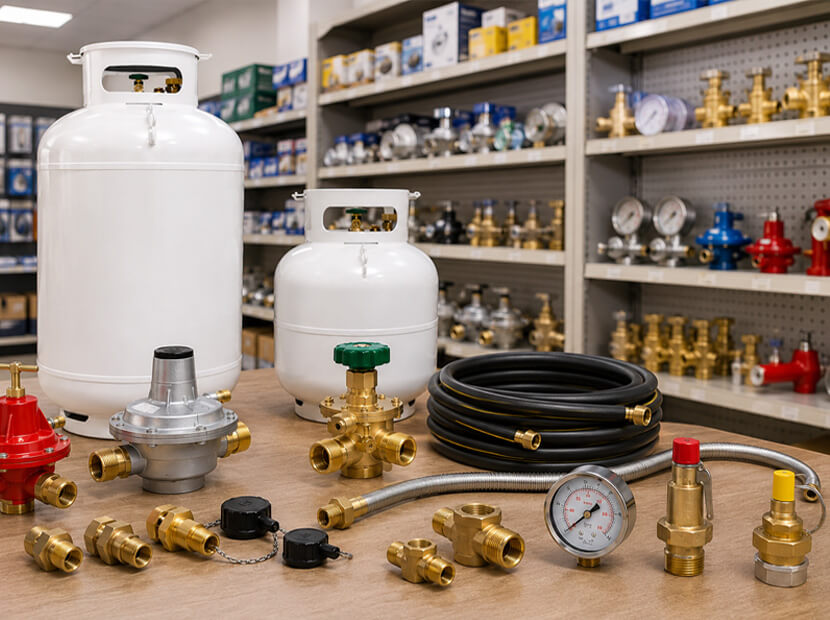
Many people associate gas equipment with propane tanks alone. In reality, a complete system includes a number of essential components:
- Propane tanks (DOT cylinders and ASME tanks)
- First- and second-stage regulators
- Service and multivalves
- Hoses and flexible gas connectors
- Fittings and connections, including POL and ACME
- Pressure gauges
- Safety relief valves and emergency shut-off devices
- Replacement parts
Each component must work with the others to deliver fuel safely and efficiently. Choosing quality equipment from a trusted distributor reduces the risk of leaks, pressure problems, and repeat repairs.
What to Look For Product Range
A distributor with broad inventory lets you source everything from one place instead of splitting an order across multiple vendors. Look for a supplier carrying:
- Propane tanks and cylinders
- Natural gas equipment and components
- Regulators for both propane and natural gas
- Valves and replacement valves
- Gas connectors and flexible lines
- Propane accessories
- Commercial and industrial gas equipment
Access to a complete range makes future maintenance far easier — and keeps your parts and fittings compatible across jobs.
Product Quality and Certification
Not all gas equipment is manufactured to the same standard. A reliable distributor carries certified products from established manufacturers that meet industry and code requirements.
Quality equipment typically means:
- Longer service life
- Improved reliability
- Lower maintenance cost
- Better overall system performance
Technical Knowledge
Gas systems vary considerably by application. A residential installation differs significantly from a restaurant kitchen, an agricultural operation, or an industrial facility. An experienced distributor
understands those differences and can recommend suitable products rather than leaving you to guess at compatibility.
Why Replacement Parts Matter More Than You’d Think
Many equipment failures have nothing to do with the tank itself. Worn or damaged components are far more often the cause of reduced efficiency or unplanned downtime.
Common replacement items include:
- Regulators
- Hoses
- Connectors
- Pressure relief valves
- Tank fittings
- Couplings
Working with a distributor that stocks these components year-round is what keeps a service call from turning into a week-long wait.
Why a Distributor, Not a Retail Outlet
Distributors generally carry deeper inventory than retail outlets and often have access to specialized products that aren’t stocked elsewhere. That depth matters most to contractors, propane service
companies, commercial accounts, and industrial facilities that can’t afford to wait on a special order.
Working with an established distributor typically means:
- Greater product selection
- Reliable, consistent inventory
- Faster access to replacement parts
- Technical assistance from people who know the product
- Volume and commercial supply capability
Signs You’ve Found the Right Supplier
A dependable gas equipment distributor should:
- Offer certified equipment from established manufacturers
- Carry a wide range of propane parts and accessories
- Provide knowledgeable product guidance
- Maintain consistent inventory
- Support both trade and commercial customers
- Stock replacement parts, not just new equipment
Why Local Support Still Matters
Plenty of products can be ordered online. Local expertise is harder to ship. A distributor familiar with Florida’s climate, code requirements, and regional customer base is better positioned to recommend equipment suited to local conditions — and to have it on a shelf you can drive to.
About Technico
Technico has distributed propane and natural gas equipment since 1985, with three Florida locations: Lake Worth, Tamarac, and Port St. Lucie, serving Palm Beach, Broward, St. Lucie, and surrounding
counties.
We supply tanks, regulators, valves, hoses, fittings, and replacement parts for residential, commercial, and industrial applications — backed by a team that knows the products and the applications they go into


